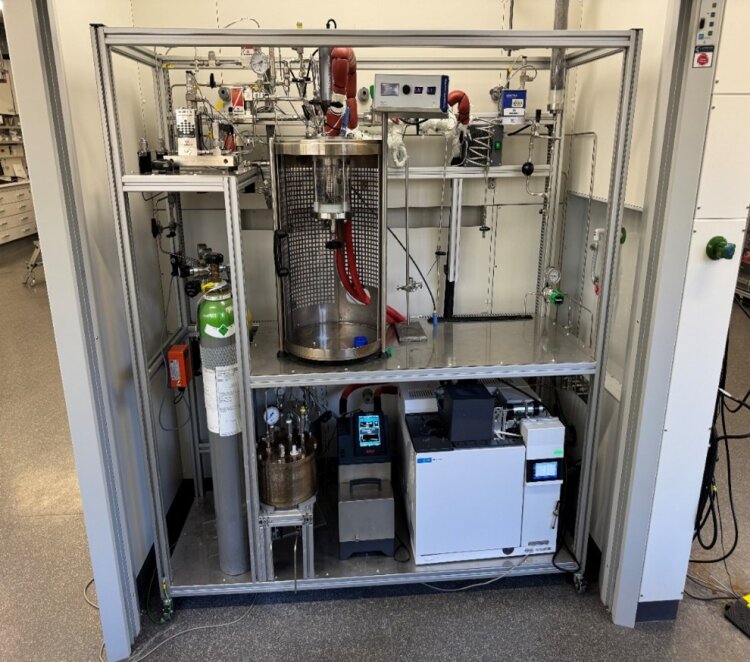
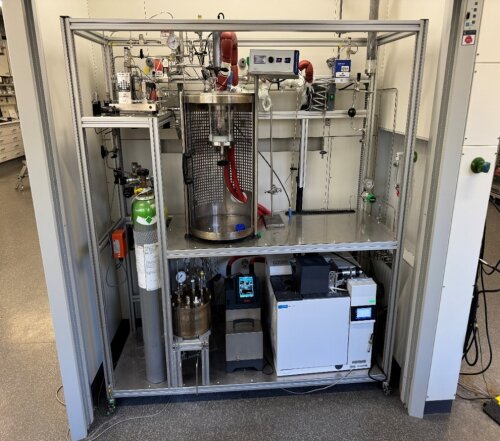
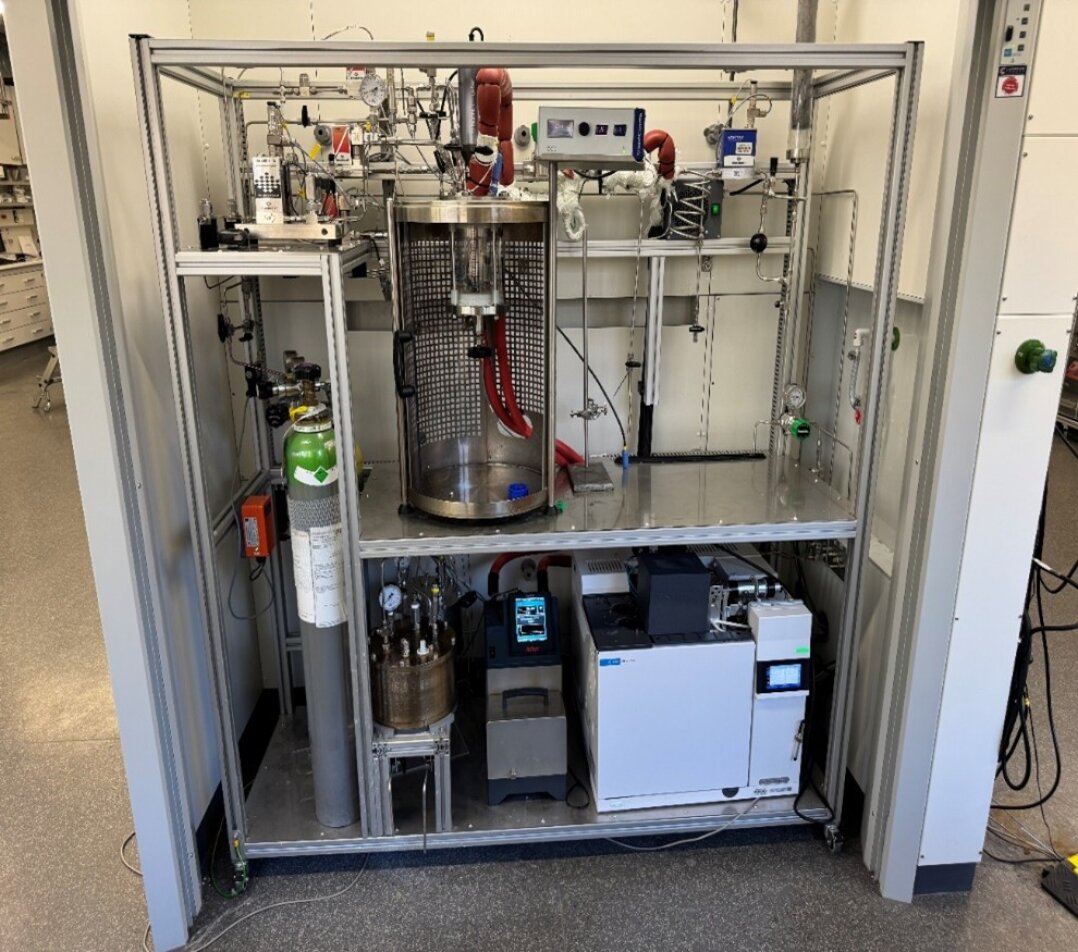
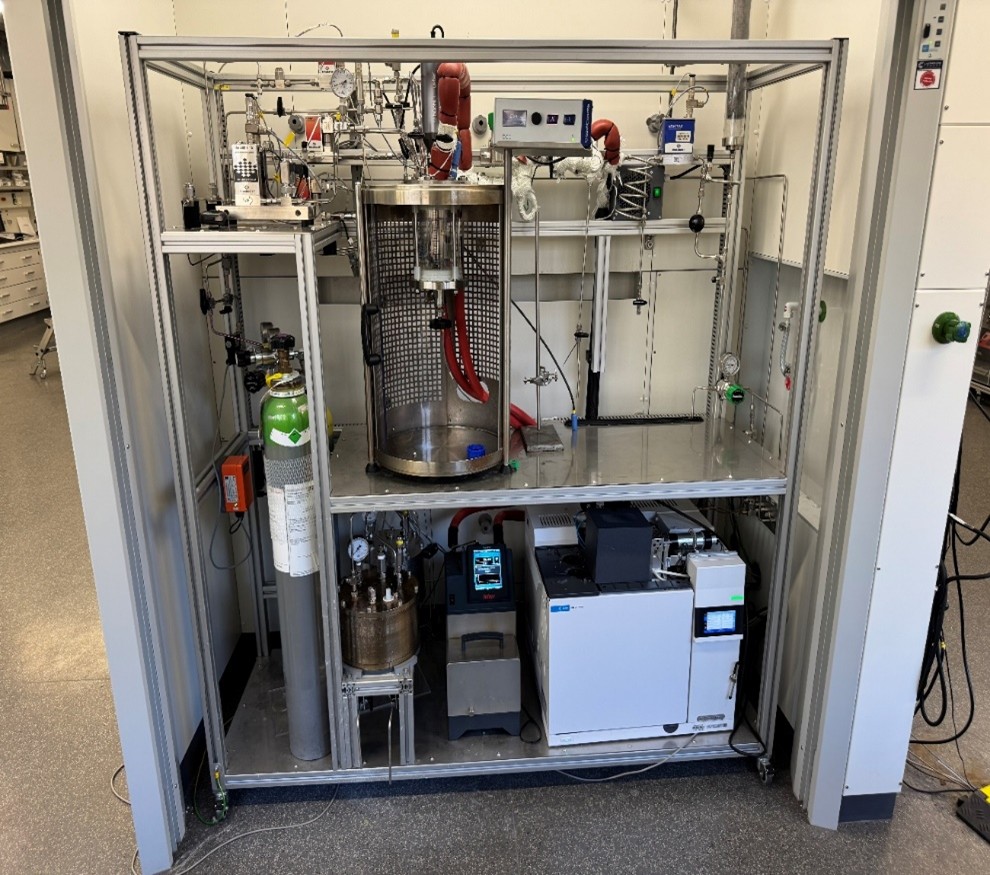
The gas scrubbing test rig is used to develop processes that remove unwanted gas components (“contaminants”) from gas streams. Using mass flow controllers, various gas mixtures can be adjusted to simulate real exhaust gas streams.
The removal of unwanted gas components takes place in a stirred tank reactor by means of oxidative scrubbing. In this process, the contaminant gases are chemically converted in a liquid and thereby removed. To closely monitor the reaction progress, the reactor is equipped with in-situ sensors that continuously measure pressure, temperature, pH value, redox potential, and conductivity, providing important information about the state of the reaction solution.
An integrated dosing station allows the addition of oxidizing agents as well as acids or bases. This enables the pH value and the concentration of the oxidizing agent to be kept stable or intentionally adjusted during the experiment.
At the reactor’s inlet and outlet, the gas composition is analyzed using a gas chromatograph. This allows determination of how effectively the contaminants have been removed. In addition, liquid samples can be taken through a bottom valve during the reaction. These samples make it possible to determine the concentration of the oxidizing agent and the reaction products formed.
The resulting data provides important insights into the effectiveness of contaminant removal, the consumption of the oxidizing agent, and the reaction kinetics. Moreover, the product spectrum and the selectivities of the formed compounds can be evaluated. This makes the system ideally suited for developing, optimizing, and assessing gas scrubbing processes.
More information you can find here.
Copyright © CSC 2025
Last update: Dec 09, 2025